How to read a prediction: entry, target and time frame
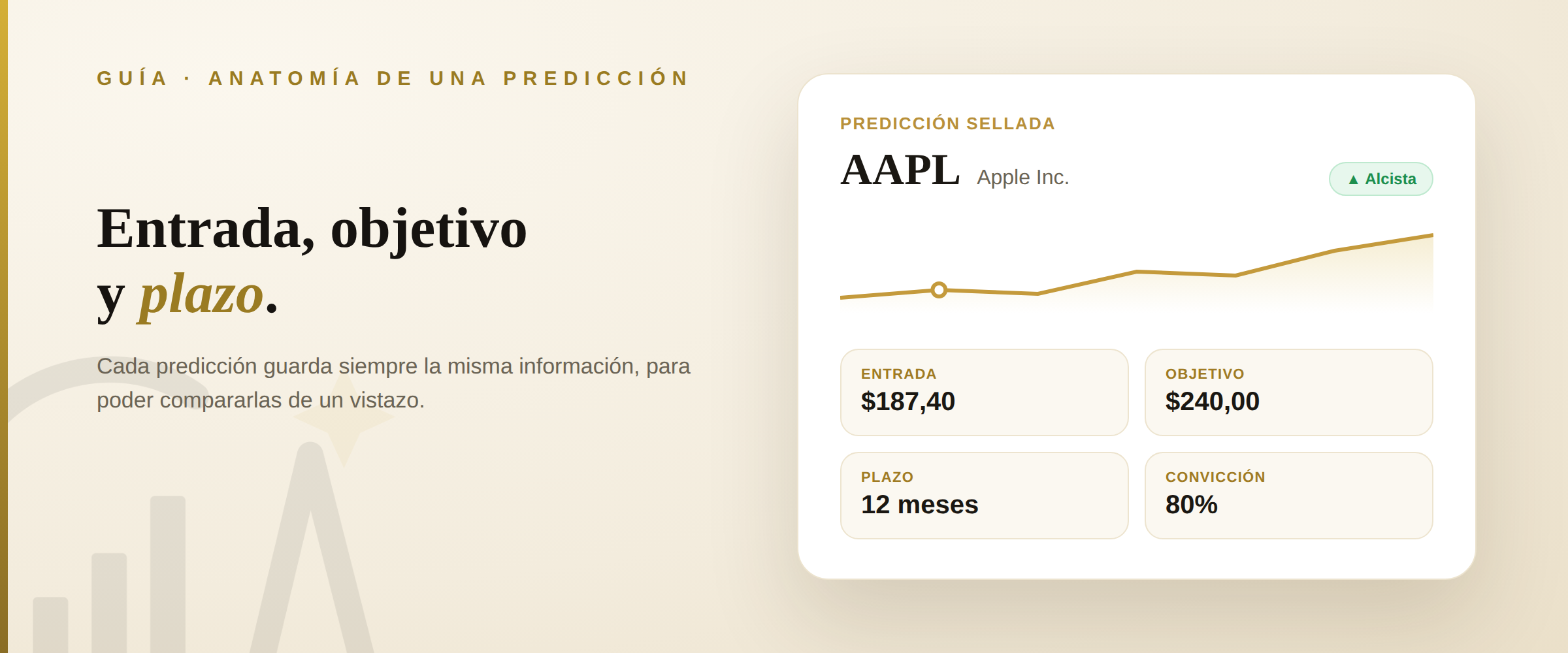
A prediction on GrandAlpha is not a loose opinion: it is a commitment backed by data. Each one holds the same information, always, so you can compare them at a glance. These are the pieces you will see and what each one means.
The real price of the asset at the exact moment the analyst sealed the prediction, taken from a market provider with its timestamp. It is the starting point: everything is measured from here, not from a price picked conveniently afterwards.
Whether the analyst expects it to rise (bullish), fall (bearish) or hold (neutral), and the specific price they believe it will reach. The target turns a hunch into something measurable: it is met or it is not.
How long is allowed for it to happen: days, months or years. Being right "in the long term" and being right "this week" do not carry the same merit, and the time frame lets each prediction be judged by its own yardstick.
From 50% to 90%, how much confidence the analyst declares. It is not decoration: failing with high conviction penalises more than failing with low, and being right and well-calibrated adds. It forces them to commit.
Whether the analyst holds a position or not in that asset. It is a public and mandatory declaration: knowing that someone is already invested in what they recommend is information you deserve to have.
What a prediction is NOT
It is not a buy order or advice tailored to your situation. GrandAlpha does not execute trades, does not hold your money and knows nothing about your circumstances. A prediction is information with a name attached: an identified person stakes their track record by saying this, on this date, at this price. What you do with that information is your decision.
How to use it well
Look at them together, not one by one. A single prediction is an anecdote; the track record of whoever signs it is the signal. Before giving weight to a thesis, look at its author's GrandAlpha Score, which assets they tend to get right and whether their previous targets were met. An asset's consensus —how many verified analysts see it rising or falling— gives you the full map.
Read it for yourself
Verified predictions, a real ranking and live market data. Explore without an account.
Open GrandAlpha →
Discussion