
Live cockroaches, a funeral wreath and 56 million dollars: the price of Silicon Valley’s most grotesque scandal
Illustration and charts: GrandAlpha Journal, based on court filings and the sources cited.
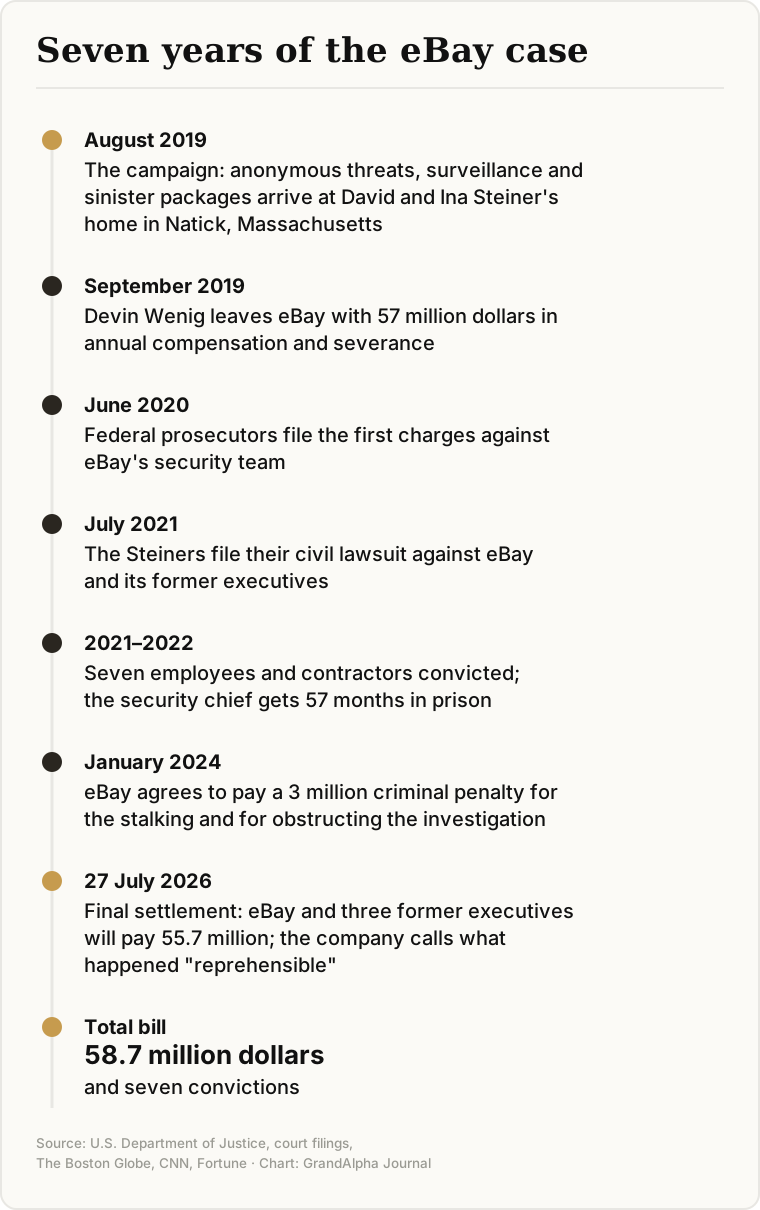
Natick, Massachusetts, August 2019. David and Ina Steiner had spent two decades writing about e-commerce from their home when the mailbox started delivering things nobody orders: live cockroaches, spiders, a bloody pig mask, a preserved fetal pig, a funeral wreath and a book on surviving the death of a spouse. In parallel: anonymous threats on social media, late-night pizzas and strangers circling their street. It was not a lone disturbed individual: it was the security team of eBay, a company then worth more than 30 billion dollars, running a campaign designed to silence two inconvenient journalists.
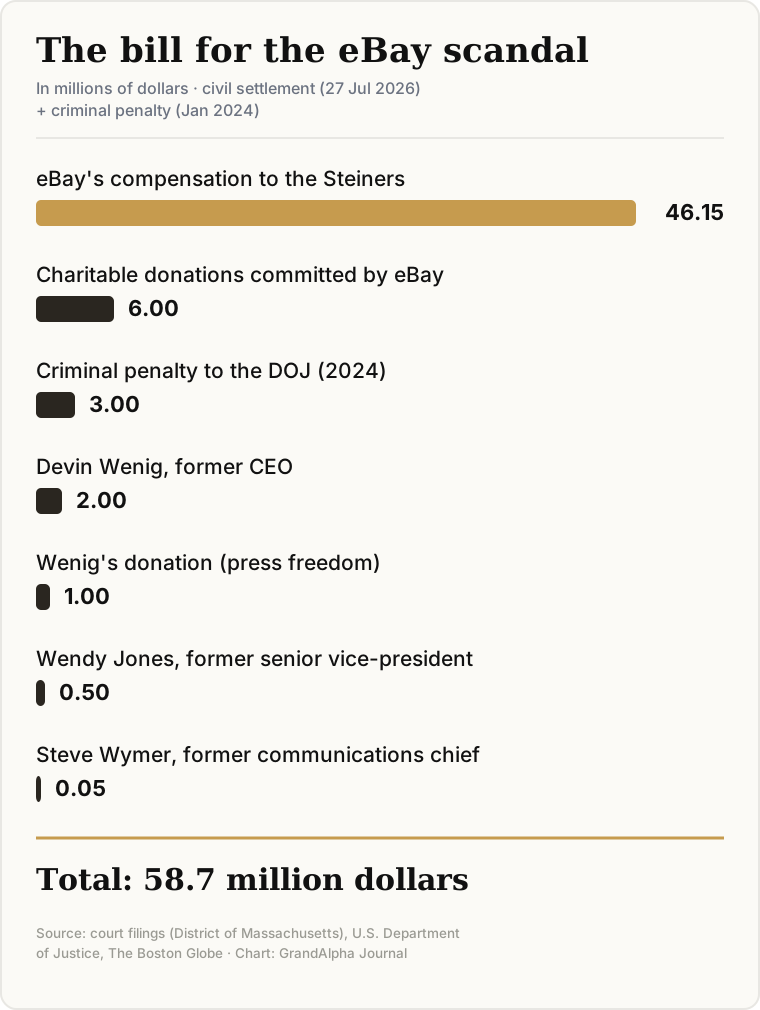
On 27 July, seven years later, the case finally closed: eBay and three of its former top executives will pay the couple 55.7 million dollars —about 56 million, of which 46.15 comes from the company itself and the rest from its former executives and charitable commitments— on top of the 3 million criminal penalty the company accepted in 2024. Almost 59 million in total between settlement and fine, seven people convicted —two with prison sentences of up to 57 months— and a lesson no investor should forget.
An inconvenient newsletter
The Steiners were not activists or disgruntled sellers. Since the late nineties they have published EcommerceBytes, a homegrown newsletter followed by tens of thousands of online sellers, covering platform fees, policies and results with a magnifying glass. That coverage —rigorous and often critical— was read at eBay’s San Jose headquarters with growing irritation, especially when it touched the pay of its then chief executive, Devin Wenig.
In August 2019, according to court filings, Wenig sent a message to his communications chief, Steve Wymer, about Ina Steiner: “take her down”. Wymer passed the assignment to security chief James Baugh with language prosecutors would make famous: “I want to see ashes. As long as it takes. Whatever it takes.” Wenig has always maintained his message referred to a communications strategy, and he was never criminally charged.
A month of terror by courier
What followed is described in notarial detail in the federal investigation: eBay’s security team opened anonymous accounts to threaten the Steiners, ordered the most macabre packages online commerce would allow to their home, posted fake ads inviting strangers to parties at their house, and even sent pornographic magazines in David Steiner’s name to their neighbours’ doors. Several team members flew from California to Boston to watch them in person and tried to attach a GPS tracker to their car.
The stated goal, according to prosecutors, was to “ruin” the couple’s life until they stopped writing about eBay. It was precisely the physical surveillance that brought the operation down: local police in Natick pulled the thread of a suspicious rental car, and the trail led straight to San Jose.
From the C-suite to prison
The first federal charges arrived in June 2020. In the end, seven eBay employees and contractors were convicted, including security chief James Baugh, sentenced to 57 months in prison, and David Harville, director of global resiliency, sentenced to 24. Others received shorter prison terms or home confinement. In January 2024, the company itself agreed to pay a 3 million dollar criminal penalty —the legal maximum for a corporation— for the stalking campaign and for obstructing the investigation that followed.
The civil case remained. The Steiners sued eBay and its former executives in 2021, in a lawsuit that at one point claimed hundreds of millions and that the company spent years trying to contain. On 27 July 2026, on the eve of a trial that would have put the 2019 leadership in front of a jury, the settlement arrived: 46.15 million from eBay to the couple, 6 million more in charitable donations, 2 million from Wenig himself —plus 1 million to a press-freedom organisation in Ina Steiner’s name—, half a million from former senior vice-president Wendy Jones and 50,000 dollars from Wymer. eBay attached an unusually blunt statement: what the Steiners endured “was wrong, reprehensible and should never have happened”.
The irony of the 57 million
One contrast sums up the case better than any ruling. Devin Wenig left eBay in September 2019, weeks after the campaign, with about 57 million dollars between his annual compensation and severance. That is almost exactly what the company and its former executives are now paying the victims. The couple, for their part, said after the settlement that the most important thing was not the money, but eBay acknowledging in writing the conduct of its former leaders.
What an investor should learn
For anyone who invests, this case is not a macabre anecdote: it is a manual on governance risk. First, because a company’s culture flows from the top: one ambiguous message from the chief executive was enough for entire departments to cross every line. Second, because the real bill for a scandal like this is not the fine —3 million was pocket change for eBay— but years of litigation, executive departures, reputational damage and strategic distraction in the middle of the e-commerce wars. And third, because none of this appeared in an income statement: it appeared in the press, in the courts and in verifiable facts.
That is precisely this publication’s thesis: narratives need defending; facts do not. A verifiable track record —of a company or of an analyst— is worth more than any speech. The eBay case has already cost almost 59 million dollars —civil settlement and criminal penalty included— to prove it.
Sources: U.S. Department of Justice (District of Massachusetts), court filings, The Boston Globe, CNN, CBS Boston, Fortune and EcommerceBytes.
Read it for yourself
Verified predictions, a real ranking and live market data. Explore without an account.
Open GrandAlpha →
Discussion